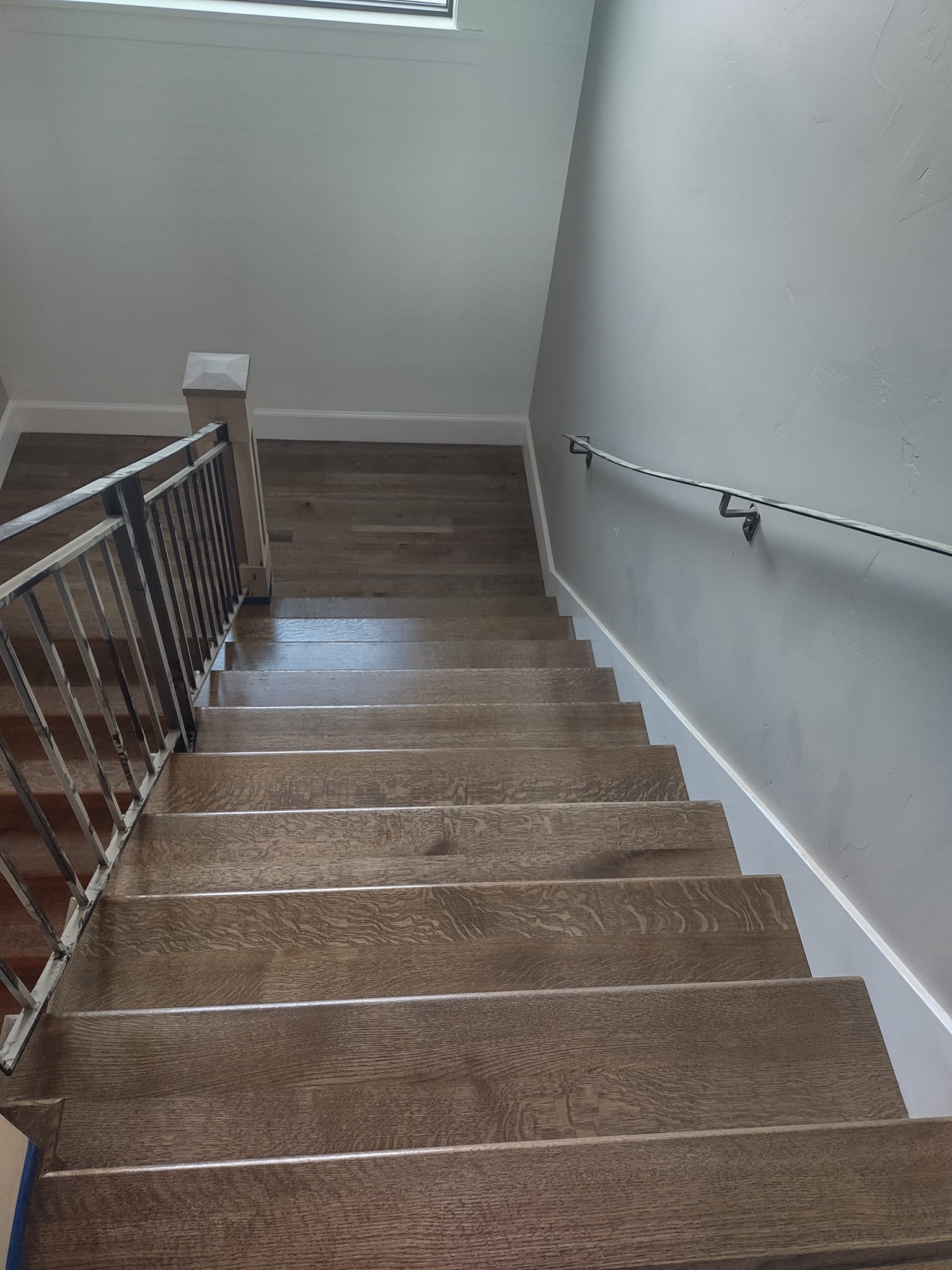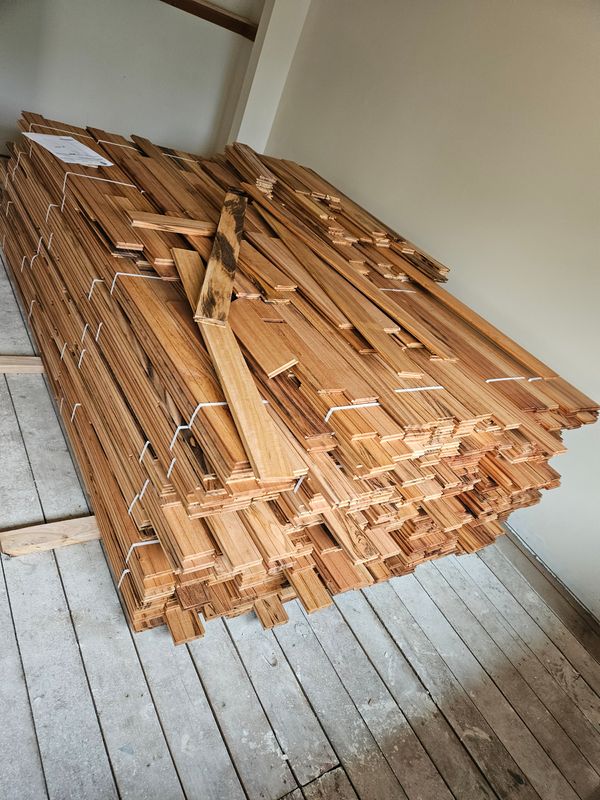
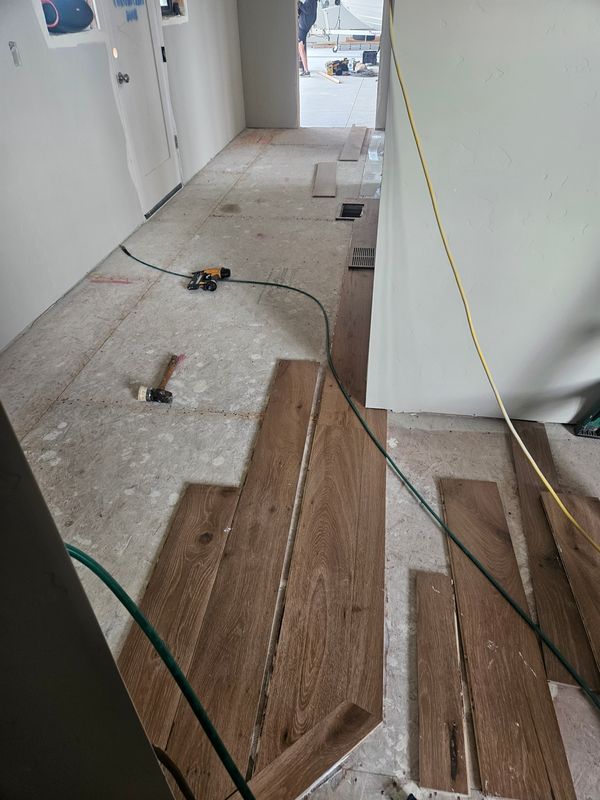
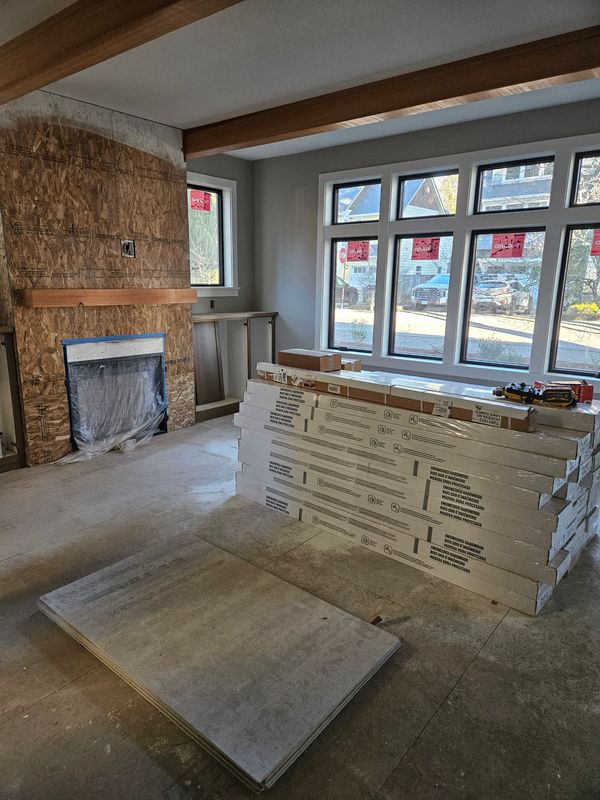
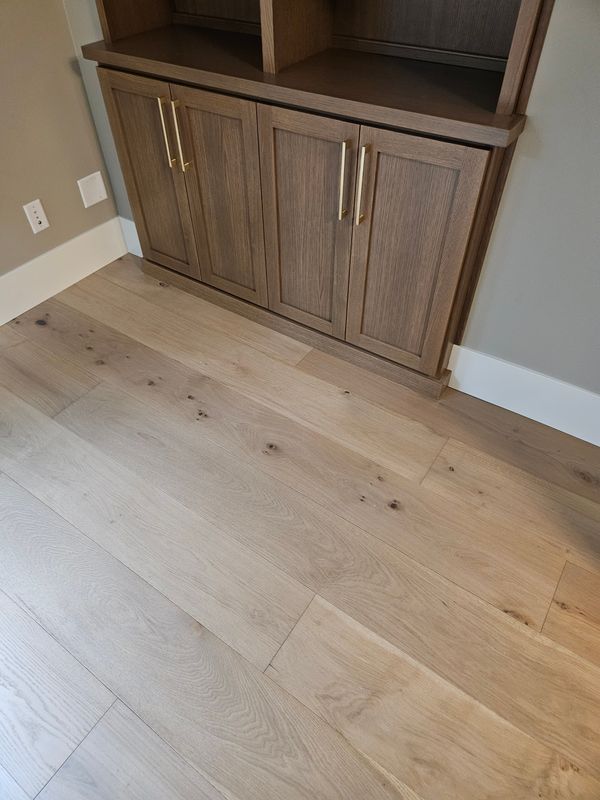
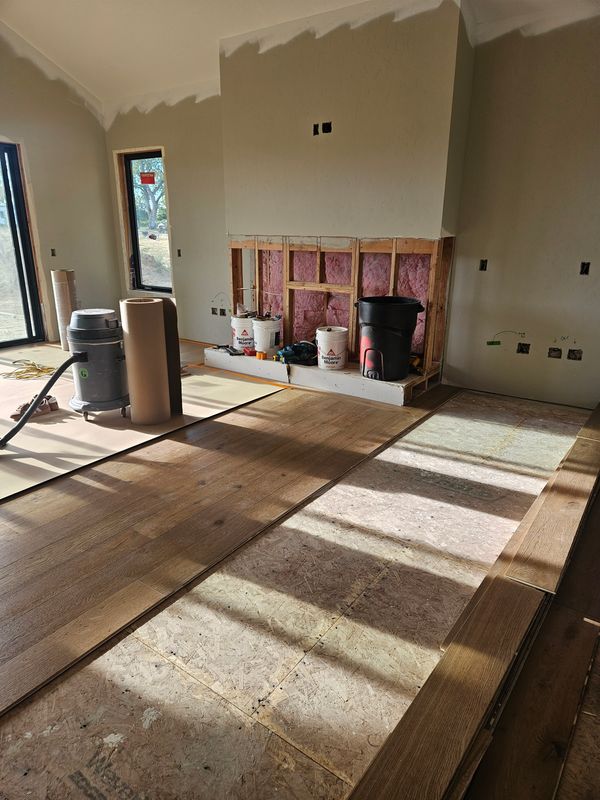
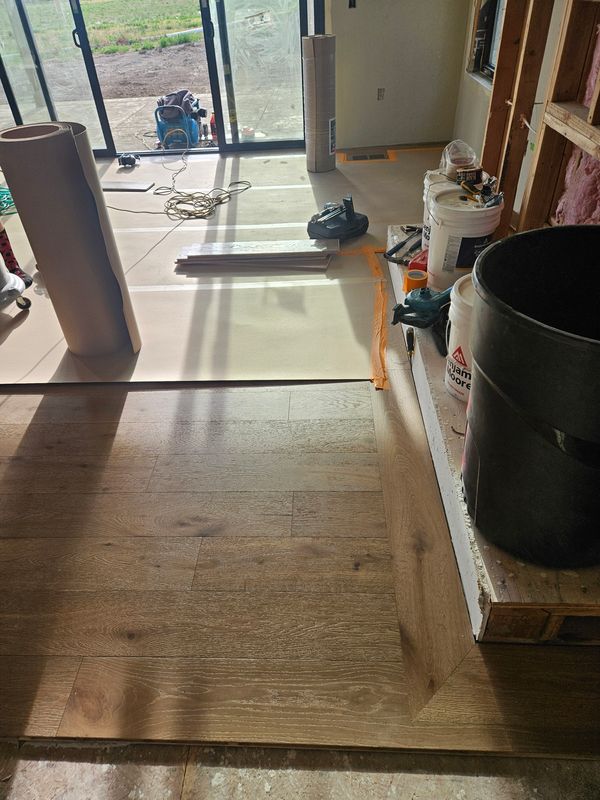
Floor installation in Portland, OR
Hardwood floors installed to last, starting under the surface
Solid hardwood, engineered hardwood, LVP and laminate, installed by an Oregon contractor, CCB #262995. We start with the subfloor and the moisture, because that is where a lasting floor is won or lost.
- Free quotes
- Oregon CCB #262995
- Mon to Fri, 9:00am to 5:00pm
What a good install includes
- A look at the subfloor before any material goes down
- A moisture meter reading before every job
- At least 7 days of acclimation for every floor
- A layout planned before the first board is set
- Clean transitions and trim at every doorway
Not sure which floor fits your home? Start with a free quote and we will talk it through.
What we install
Four floors, honest pros and cons
The best floor depends on the room, the subfloor and how you live. Here is the plain version of each.
Solid hardwood
One piece of real wood from top to bottom, usually nailed down over a wood subfloor.
The good
- Sands and refinishes many times over its life
- The classic look and feel of real wood
The trade-offs
- Moves more with humidity, so acclimation and care matter
- Usually not the right pick below grade or straight over concrete
- Often a bigger investment up front
Engineered hardwood
A real wood top layer over a layered core built to stay stable.
The good
- More stable through humidity swings
- Fits more places, including many basement and over-concrete installs
- Can be nailed, glued or floated, depending on the product
The trade-offs
- Top layer thickness limits how often it can be refinished
- Quality varies a lot from product to product
LVP (luxury vinyl plank)
Waterproof-core vinyl planks with a realistic wood look.
The good
- Waterproof options for kitchens, baths and basements
- Tough and easy to clean
The trade-offs
- Not real wood and cannot be refinished
- Heavy point loads can dent it
Laminate
A photo layer under a hard clear wear surface, usually floated.
The good
- Scratch-resistant surface
- Often a lower price point than real wood
- Floating install is quick
The trade-offs
- Can swell if water gets in at the seams
- Cannot be refinished
- Can sound hollow without the right underlayment
Solid vs engineered
Solid or engineered hardwood, in plain terms
Both are real wood on top. The difference is what is underneath, and that decides where each one works best.
| Compare | Solid hardwood | Engineered hardwood |
|---|---|---|
| Construction | One solid piece of wood | Real wood top layer over a layered core |
| Humidity | Expands and contracts more with the seasons | More dimensionally stable |
| Basements and concrete | Generally not recommended | Often a good fit with the right moisture check and install method |
| Refinishing | Can be sanded many times | Limited by the thickness of the top layer |
| Install method | Typically nailed down | Nailed, glued or floated, depending on the product |
| Best for | Main floors with a wood subfloor | Most rooms, and spaces where humidity swings |
Portland's wet season
Moisture checks and acclimation come first
Western Oregon's long wet season swings the humidity inside homes, and wood responds. Three steps keep a new floor from moving on you.
Check the moisture
We take a moisture meter reading before every job. If it reads wet, we wait for the floor to dry before anything is fastened down. A floor installed over a damp subfloor can cup or gap later.
Let the wood acclimate
Every floor acclimates in your home for at least 7 days, and longer is better. It lets the material settle to your home's humidity, which helps prevent gaps and uneven boards.
Leave room to move
Wood swells in damp months and shrinks in dry ones. A small expansion gap at the walls, hidden under trim, lets it move without buckling.
Methods and subfloors
The method and the subfloor shape the job
There is more than one way to install a floor. Which one fits depends on the product and what is underneath, and it affects the scope and the price. We confirm it in your quote.
| Method | How it works | Where it fits |
|---|---|---|
| Floating (click-lock) | Planks click together and rest on an underlayment, with no glue or nails | The usual method for LVP |
| Glue-down | The floor is glued to the subfloor | Typical on concrete |
| Nail-down | Boards are nailed through to the subfloor | Over a wood subfloor |
| Glue plus nails | Both together for extra hold | Some wide planks |
Concrete
Concrete can hold moisture, so we measure it first and use sealers when the slab needs one. Glue-down is the typical method over concrete.
Flat and level
We grind high spots on concrete, sand down high spots on a wood subfloor and build up low spots with wood, so the new floor lies flat.
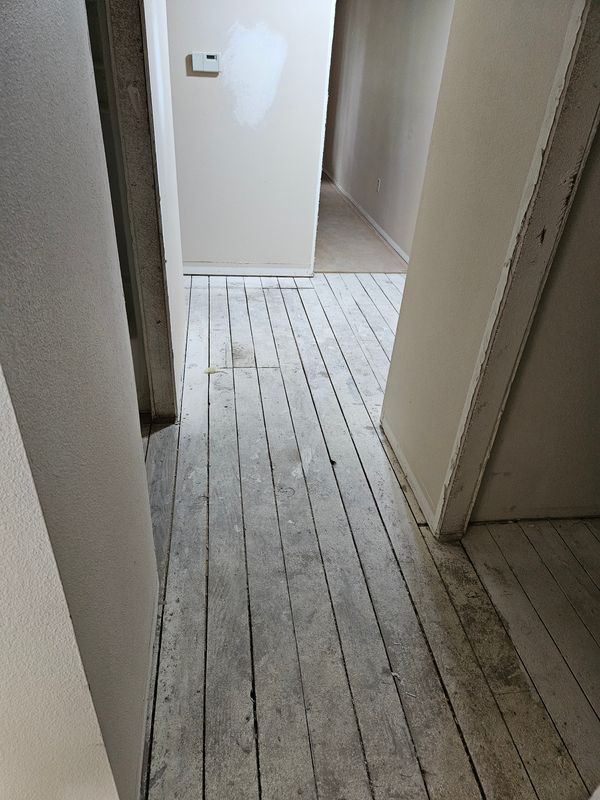
No installs over chipboard
We will not install over chipboard. It comes out, or we add plywood over it first.
Moisture from under the house
If moisture is coming up from below, we find it and tell you. When a basement or foundation specialist is needed, we say so. We do not waterproof under the house.
How an install goes
The install process, step by step
Every job is a little different, but the order stays the same.
Inspect the subfloor
We look for damage, movement, squeaks, chipboard and anything that will show through the new floor.
Prep and flatten
Concrete is ground, high spots are sanded and low spots are built up with wood until the subfloor is flat.
Check moisture, acclimate
A meter reading first, and we wait if it reads wet. Then the material acclimates for at least 7 days.
Plan the layout
Direction, starting wall and board spacing are planned before the first board is set.
Install the floor
Floating click-lock, glue-down, nail-down, or glue plus nails, whichever suits the product and the subfloor.
Trim and finish up
Transitions and trim go in, then a walkthrough with you.
Common questions
Floor installation FAQ
How long does a floor installation take?
It depends on the square footage, the material, the condition of the subfloor and the layout. We give you a timeline with your quote. Acclimation alone is at least 7 days, and subfloor prep or waiting for a wet floor to dry can add more time before the first board goes down.
Can you install over my existing floors?
Sometimes. Floating floors such as LVP, laminate and some engineered products can often go over a flat, sound, dry floor. Nail-down hardwood generally needs a wood subfloor underneath. We do not install over chipboard: it comes out or gets plywood over it first. Tell us what is there when you ask for a quote and we will confirm after a look.
Nail-down, glue-down or floating: what is the difference?
Nail-down boards are fastened to a wood subfloor. Glue-down floors are glued to the subfloor, which is typical over concrete. Floating floors click together and rest on an underlayment. Some wide planks get glue plus nails. The method affects the scope and the price, so we confirm it in your quote.
Which floor is best for a basement or a kitchen?
Basements run damp, so LVP or engineered products suited to the space are usually the safer choice, and solid hardwood is generally not recommended below grade. Kitchens see spills, so engineered hardwood or LVP are common picks. Either way, a moisture meter reading comes first, and on concrete we measure it and use sealers when needed.
Do you check moisture, and what if my floor reads wet?
Yes. We take a moisture meter reading before every job. If the readings are high, we wait for the floor to dry before installing, because a floor installed over moisture can cup, gap or buckle later.
How long does the flooring need to acclimate?
At least 7 days for every floor type, and longer is better. Acclimating lets the material adjust to your home, which helps prevent gaps and uneven boards.
My subfloor is uneven. Can you still install?
Usually, once it is leveled. We grind high spots on concrete, sand down high spots on a wood subfloor and build up low spots with wood. Chipboard has to come out, or plywood goes over it.
What if moisture is coming from under my house?
We find it and tell you. If a basement or foundation specialist is needed, we say so before the floor goes in. We do not waterproof under the house.
Do you remove my old flooring?
Tell us what is currently on the floor when you ask for your quote. We confirm what the job involves, including removal, before any work starts.
How do I get a quote?
Quotes are free. Text us, chat with us on the phone, then receive your quote. Use the button below or call (503) 664-9525, Monday to Friday, 9:00am to 5:00pm.
Ready when you are
Let us quote your new floor
Tell us about the room and the floor you are considering. We will help you work out what fits.
Text us
Tell us about the room and what you have in mind.
Chat on the phone
We talk through the details together.
Receive a quote
Your free quote for the work.
Serving Portland, Sandy, Gresham, Beaverton, Tigard, Aloha, Lake Oswego, Oregon City, Tualatin, Estacada, Hillsboro and Wilsonville, Oregon. Oregon CCB #262995. Office hours Monday to Friday, 9:00am to 5:00pm.